IAASB ISSA 5000 represents a significant step in this transformation. With Australia recently adopting this global standard, audit and assurance firms worldwide are taking notice
In the rapidly evolving world of corporate sustainability, the critical importance of accurate, comprehensive environmental, social, and governance (ESG) reporting cannot be overstated. neoeco, leveraging the Life Cycle Sustainability Assessment (LCSA) approach, stands at the forefront of transforming how companies measure and report their ESG impacts. Our new whitepaper explores LCSA and how neoeco integrates it to ensure that companies meet and exceed global regulatory sustainability requirements.
ESG reporting can be a powerful tool for driving sustainability and providing insights for positive sustainable change - but the accuracy of data is essential.
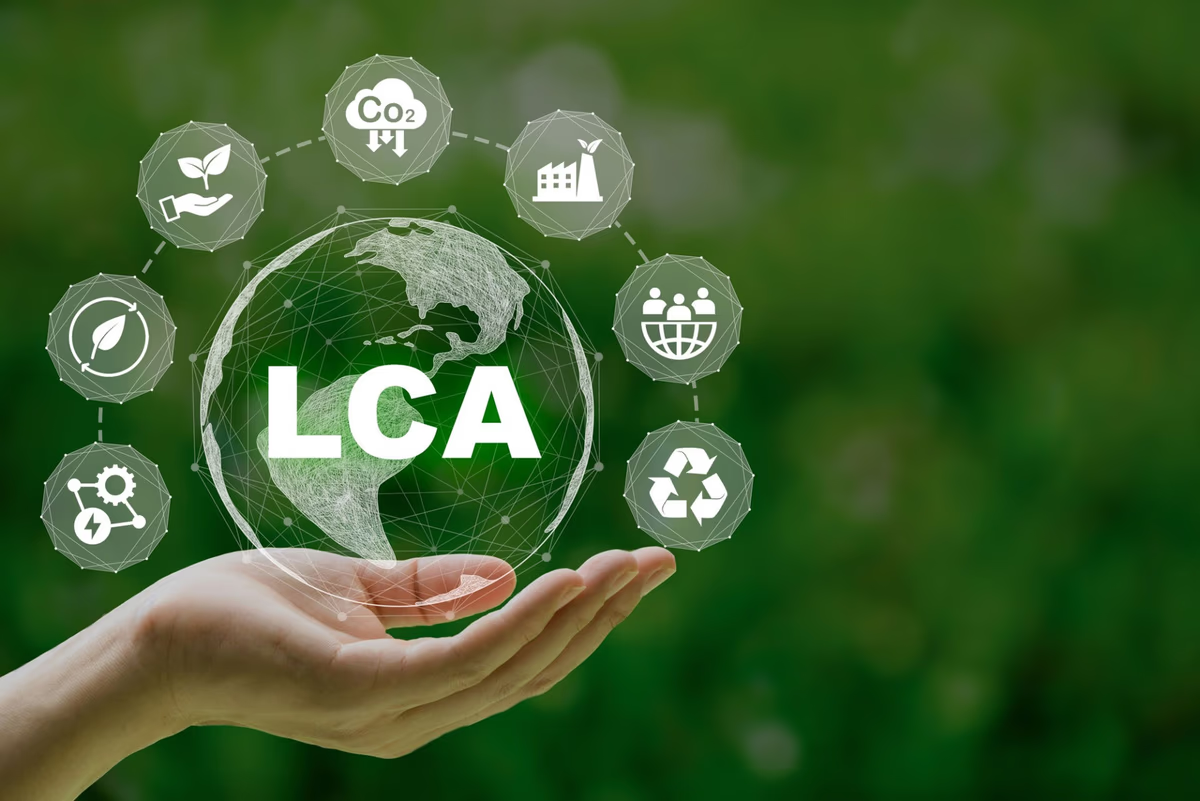
Life Cycle Assessment (LCA) is becoming a must-have for strong ESG reporting. This webinar explains LCA in simple terms and shows how it helps companies report clearly, cut impact, and make better decisions.
A quiet but profound shift is reshaping the future of sustainability reporting. For years, ESG data has relied on generalised assumptions, emissions factors, industry averages, and spreadsheet-driven estimations. The solution is emerging in the form Cycle Sustainability Assessment (LCSA),a science-based, finance-grade approach to carbon and ESG accounting that is rapidly becoming the benchmark for credible sustainability disclosure.The solution is emerging in the form Cycle Sustainability Assessment (LCSA),a science-based, finance-grade approach to carbon and ESG accounting that is rapidly becoming the benchmark for credible sustainability disclosure.