
Sustainability & ESG
GHG Protocol vs CSRD: Data Alignment Guide
Align GHG Protocol emissions with CSRD/ESRS E1: segment Scope 3, integrate financial data, automate reporting and produce audit-ready reports.
31 January 2026 19 min read
Insights
Practical explainers on ESG, carbon accounting, and sustainability reporting.
Align GHG Protocol emissions with CSRD/ESRS E1: segment Scope 3, integrate financial data, automate reporting and produce audit-ready reports.

Compare SEC and UK SRS materiality rules for climate and sustainability reporting: thresholds, Scope 1-3, assurance and filing deadlines.

UK SRS makes material Scope 3 reporting mandatory with phased relief from 2026–27; accountants must handle materiality, supplier data and audit‑ready evidence.

IoT sensors and cloud platforms capture real-time energy use to simplify SECR reporting, reduce errors and provide continuous, audit-ready records.

Finance-integrated ESG tools streamline SECR, ISO 14064 and Scope 3 reporting with ledger integration and audit-ready evidence.

Explains how Life Cycle Assessment (LCA) improves accuracy for Scope 1, 2 and 3 GHG reporting, maps value‑chain emissions and supports ISSB, CSRD and GHG Protocol compliance.

Data-driven strategies to map supplier vulnerabilities, cut Scope 3 emissions and build resilient, compliant supply chains against physical and transition risks.

Five-step guide for accountants to validate ESG materiality: set quantitative thresholds, list ESG topics, apply qualitative review, collect stakeholder input and document results.

Covers CSRD's double materiality and ISSB's investor-focused financial materiality, their interoperability, timelines and practical steps to simplify ESG reporting.
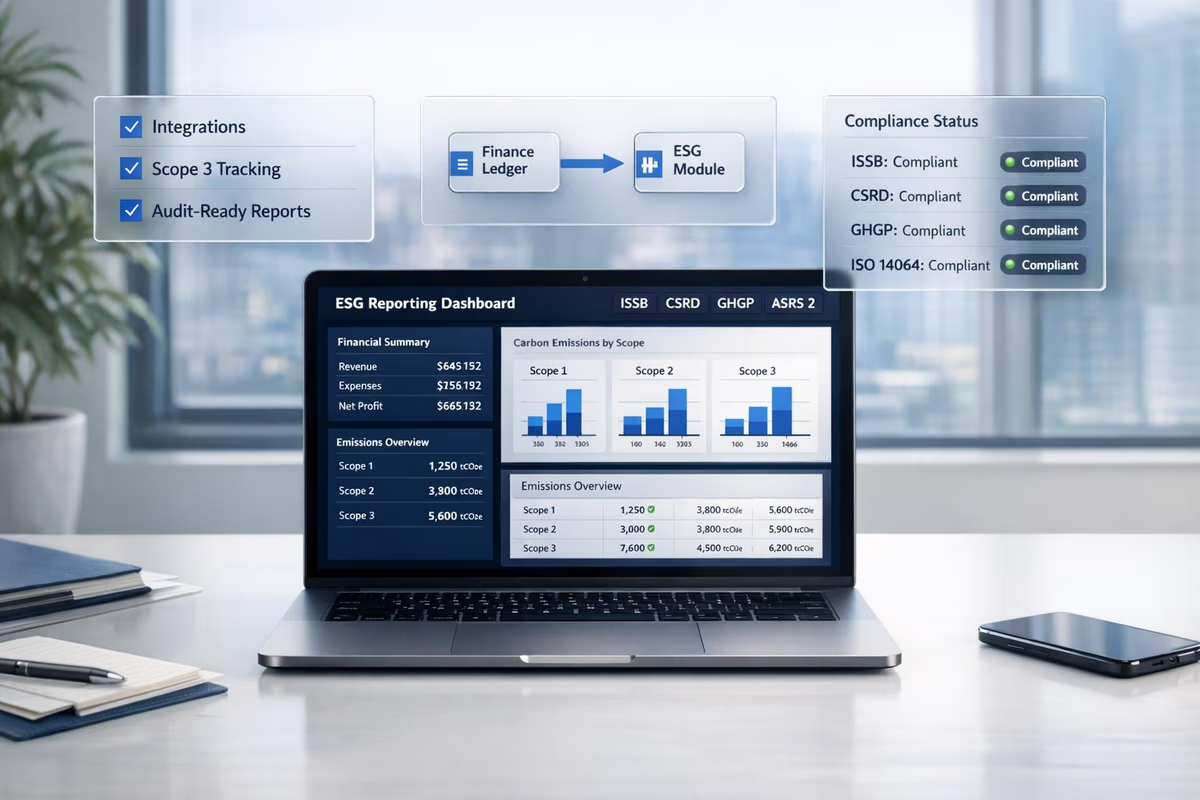
Checklist for accounting firms to pick ESG reporting software: integration with finance systems, compliance with standards, accurate Scope 3 tracking and audit-ready reports.
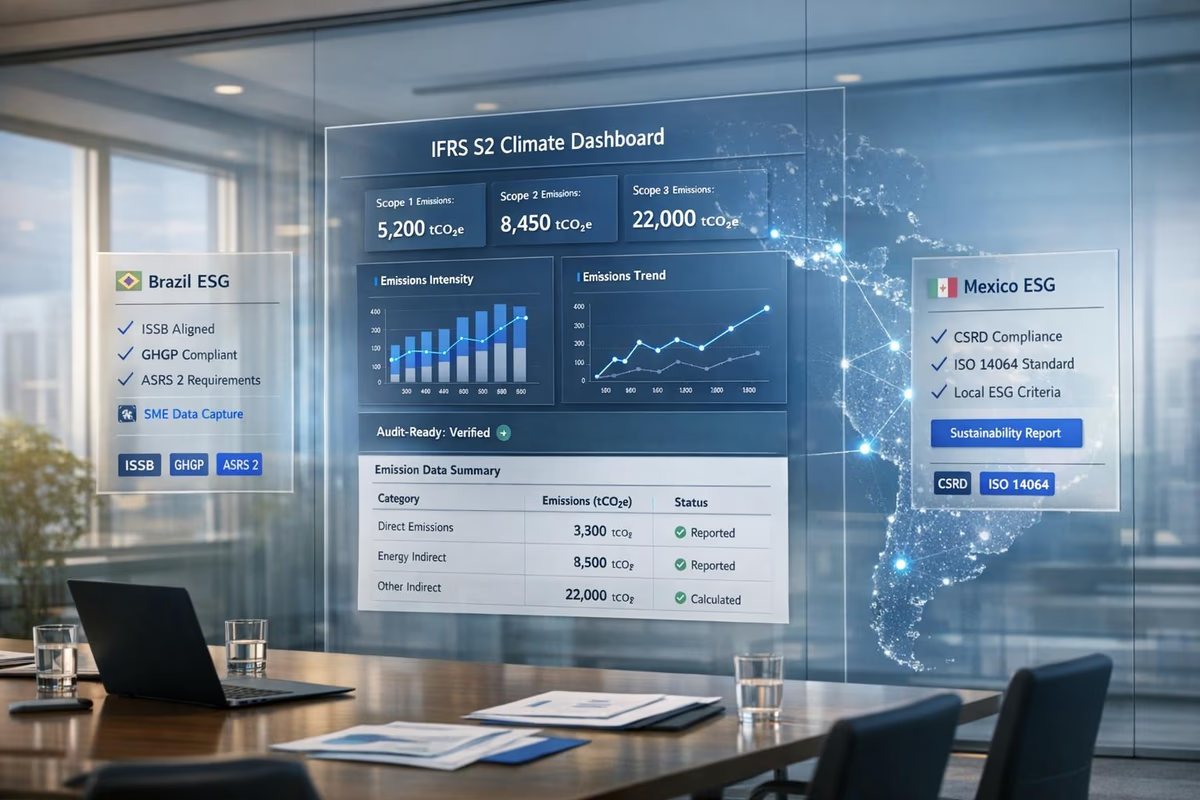
Overview of IFRS S2 adoption in Latin America, local ESG differences, SME data challenges and the role of technology for audit-ready climate reporting.

Mapping Scope 3 should be a priority: follow five practical steps to map supply chain emissions for CSRD compliance using spend-based baselines and supplier data.